
Conservatory Roof U-Values Explained
Conservatory Roof U-Values Explained
You may have heard the term 'U-value' used in relation to windows and doors, but what exactly is a U-value, and what does it mean for your conservatory roof?
The 'U' in U-value isn't an abbreviation for a longer word, as you might expect. It's the symbol used in engineering to represent the overall heat transfer coefficient. In simple terms, a U-value measures how easily heat passes through a building element, such as a roof, wall, window or floor. It's measured in W/m²K (watts per square metre per kelvin).
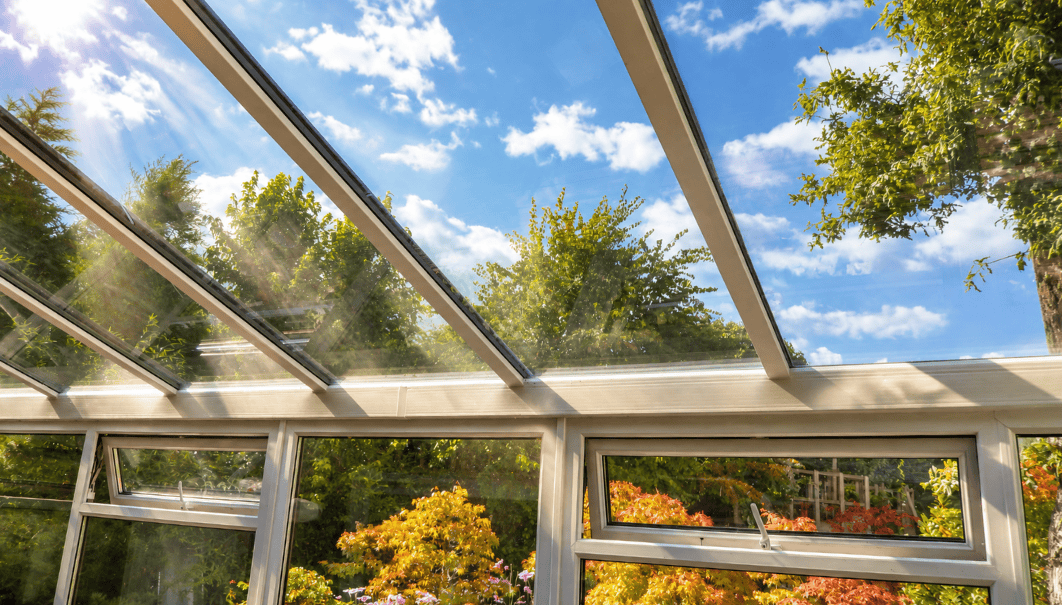
The lower the U-value, the better the insulation and the less heat can escape. This means that a conservatory roof with a low U-value will generally retain heat much more effectively during colder weather than one with a high U-value.
Typical Conservatory Roof U-Values
| Conservatory roof type | Typical U-value (W/m²K) | Indicative thermal performance |
| Single-glazed glass (older installations) | 5.7–5.8 | Very poor |
| Older twin-wall polycarbonate (6–10mm) | 2.9–3.7 | Very poor |
| Older standard double-glazed glass | 2.7–3.0 | Poor |
| Triple-wall polycarbonate (16mm) | 2.2–2.4 | Poor |
| Modern Low-E double-glazed glass | 1.0–1.6 | Moderate |
| Multiwall polycarbonate (25–35mm) | 1.2–1.7 | Moderate |
| Insulated roof panels (25–35mm) | 0.75–0.98 | Good |
| Insulated warm roof systems | 0.15-0.18 | Excellent |
How Much Heat Loss Can a Replacement Conservatory Roof Prevent?
Reduction in Heat Loss | ||
| Conservatory roof type | Insulated Roof Panels | Insulated Warm Roof |
| Single-glazed glass (older installations) | Up to 87% | Up to 97% |
| Older twin-wall polycarbonate (6–10mm) | Up to 80% | Up to 96% |
| Older standard double-glazed glass | Up to 75% | Up to 95% |
| Triple-wall polycarbonate (16mm) | Up to 69% | Up to 94% |
| Modern Low-E double-glazed glass | Up to 53% | Up to 91% |
| Multiwall polycarbonate (25–35mm) | Up to 50% | Up to 91% |
*Figures show the maximum indicative reduction in heat transmission, calculated using typical or published U-values. Comparisons are based on equivalent roof areas and temperature differences. Actual performance will depend on the existing roof specification, the replacement product and installation. U-values may relate to individual glazing units, panels or complete roof constructions, so comparisons are indicative rather than guaranteed whole-roof savings. Figures do not represent reductions in total conservatory heat loss or household energy bills.
Will a Lower U-Value Also Keep My Conservatory Cooler in Summer?
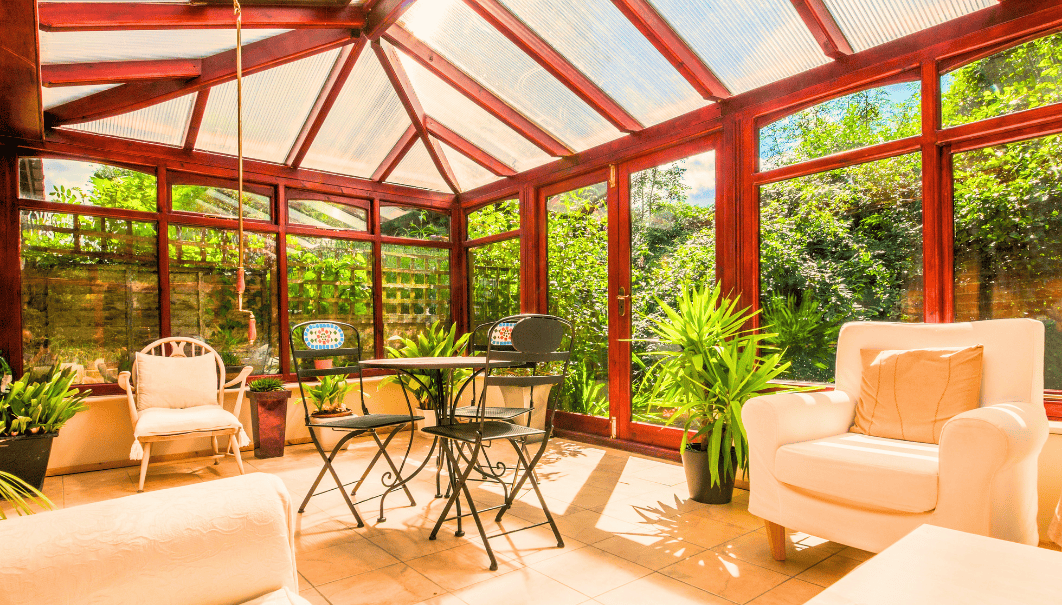
While U-values are particularly useful for understanding how well a conservatory roof retains heat during colder months, they are also relevant to summer temperatures.
A well-insulated roof slows down heat transfer in both directions, helping to reduce the amount of heat entering through the roof when it's hotter outside than inside.
However, there's another important factor to consider: solar gain.
Traditional glass and polycarbonate conservatory roofs allow sunlight to pass through, heating the surfaces and furnishings inside. This heat can quickly build up, particularly in south-facing conservatories, making them extremely uncomfortable during warmer weather.
The amount of solar energy passing through glazing is measured by its G-value. Unlike U-values, which measure heat transfer, G-values indicate how much of the sun's energy enters through the glazing. The lower the G-value, the less solar heat is transmitted.
This explains why even a modern double-glazed conservatory roof with a relatively low U-value can still allow the room to become unbearably hot in summer.
Typical Conservatory Roof G-Values
| Conservatory Roof Type | Typical G-Value | Solar Energy Admitted |
| Single-glazed glass (older installations) | 0.82–0.87 | 82–87% |
| Older twin-wall polycarbonate (6–10mm), clear | 0.81–0.82 | 81–82% |
| Older standard double-glazed glass, clear | 0.75–0.80 | 75–80% |
| Triple-wall polycarbonate (16mm), clear | 0.75–0.77 | 75–77% |
| Modern Low-E double-glazed glass | 0.40–0.75 | 40–75% |
| Multiwall polycarbonate (25–35mm), clear | 0.60–0.78 | 60–78% |
| Insulated roof panels (25–35mm) | N/A (opaque roof) | 0% |
| Insulated warm roof systems | N/A (opaque roof) | 0% |
*Opaque insulated roof panels and solid warm roofs block 100% of direct solar transmission through the roof, assuming no rooflights are fitted. However, some heat can still pass through the roof construction when its external surface is heated by the sun. Actual summer temperatures will also depend on windows, ventilation, shading and the conservatory's orientation.
Replacing a glass or polycarbonate roof with insulated roof panels or a solid warm roof tackles both problems. The opaque roof prevents direct sunlight from passing through the roof itself, while the insulation reduces heat transfer through the roof construction.
Although the temperature of a conservatory will still be affected by its windows, orientation and ventilation, an insulated replacement roof can make a significant difference to comfort during both summer and winter.